Quick answer: Start dealing with gambling debt by stopping the current session and protecting money for food, housing, medicine and transport. Gather one urgent bill, its deadline and your income details. Contact the creditor and a reputable credit counselor about affordable options. Treat the debt and the urge to gamble as separate problems needing support.
Money & debt
Gambling Debt: Protect Essentials and Plan Your Next Step
By QuitBet Addiction Research Team · Updated · 8 min read
On this page
- What should you do about gambling debt today?
- Which money should you protect before payday?
- How do you ask a creditor for help?
- Where can you find reputable gambling debt help?
- Are debt settlement and consolidation the same thing?
- What if a collector calls or court papers arrive?
- What can you put in a simple money worksheet?
- How do you keep the next urge separate from the bill?
- FAQ
You may owe a lender, friends or family, or have no loan at all, just missing rent money. Start with the next deadline; you do not need to calculate every loss before asking for help.
What should you do about gambling debt today?
Stop the current gambling session, protect the next essential expense and find the closest payment deadline. A past loss does not make another bet a reliable way to repair it.
- Close the screen or leave the venue safely. Put distance between you and the next deposit.
- Check an available protection: account self-exclusion, a device blocker or bank gambling controls. Record what is active and what is still pending.
- Keep one bill or notice. Note its amount, deadline and requested action.
- Contact the relevant creditor or an advice service. Missing paperwork can follow; explain what you do not know.
Our first-day quitting guide explains the access steps. The gambling blocker finder helps you check device and country options; no single layer covers every route.
If the debt is making you think about harming yourself or you cannot stay safe, seek crisis or emergency help now. Ask a safe person to stay with you if possible. Sorting the figures can wait until you have help getting through the immediate danger.
Which money should you protect before payday?
Write down the needs that must be covered before your following income arrives, including dependents' needs. The amount in your bank account may already be needed for food, housing, medicine or getting to work.
Use bills and ordinary bank statements. Include dates as well as totals: paying everything toward one balance today could leave nothing for groceries tomorrow. The CFPB's money toolkit has bill calendars, cash-flow tools and a sheet for prioritizing bills.
List any shutoff, eviction, repossession or court notice separately. Ask qualified local help about its consequences and deadline. A general repayment method cannot decide which legal or housing risk matters most in your circumstances.
Example: Your next wages are $900. Essentials before the following payday total $950, including a household bill due Monday. There is a $50 shortfall before any extra debt repayment. That is a reason to ask about assistance and payment options, rather than try to turn $50 into a win.
Moving money between your own accounts does not itself block gambling. Check your payment protection before payday, and keep access to necessities.
How do you ask a creditor for help?
Contact the creditor early with the amount you can afford and a specific request. The CFPB recommends contacting your card company immediately if you cannot make the minimum; some companies will discuss temporary payment changes.
Use the contact on your statement or the company's official website. Explain the shortfall without promising an amount you have not checked.
Example call script:
"I cannot cover the payment due Friday. After essential expenses, I can currently afford $____. What hardship options can you discuss? Please explain the interest, fees, payment dates and any effect on the account, and send the terms in writing."
If you do not know when normal payments can restart, say so. Record the person's name, date and follow-up. Ask for time to review terms you do not understand.
A request does not guarantee lower payments, stopped interest or protection from collection.
Where can you find reputable gambling debt help?
A reputable credit counselor can review your finances and explain options, while gambling support helps address the behavior that is putting new money at risk. Ask for both types of help if you need them.
The CFPB's credit counseling guide links to the National Foundation for Credit Counseling and Financial Counseling Association of America. It also explains questions to ask before signing up. Nonprofit status does not mean every service is free.
Before agreeing to a plan, ask:
- What help do you offer besides a debt management plan?
- What training or certification does the counselor have?
- Which initial, setup or monthly charges apply? Can I have them in writing?
- What happens if I cannot afford the fees?
- How will I check that creditors have accepted any proposed plan?
For a court or housing deadline, seek local legal help promptly. The Legal Services Corporation directory helps locate civil legal aid programs; ask about eligibility and capacity.
Call or text 1-800-MY-RESET for gambling support and local referrals. NCPG's helpline information includes financial counseling among possible resources, which vary by location. It is a referral and support service, not a promise to pay your debts.
Are debt settlement and consolidation the same thing?
They are different options with different risks, so ask which service is actually being offered. A label such as "gambling debt relief" does not establish what the company will do.
| Option | What it generally involves | What to check |
|---|---|---|
| Credit counseling | A review of income, bills and debt, with advice on possible next steps | Qualifications, services and fees |
| Debt management plan | Arranged payments through a counseling organization to participating creditors | Affordability, creditor acceptance and terms |
| Consolidation loan | New borrowing used to pay existing debts | Total cost, rate, term and any collateral |
| Debt settlement | Seeking creditor agreement to accept less than the balance | Fees, collection risk and effects of missed payments |
The CFPB explains these differences. Do not assume that a smaller monthly payment means a lower total cost.
The FTC warns that debt settlement can leave you owing more through interest and late charges, and not every debt may be settled. Be wary of guaranteed erasure, pressure to stop communicating with creditors or demands for large upfront payments. Get independent advice before committing.
What if a collector calls or court papers arrive?
Check who is contacting you, request the debt information and keep the notices. Do not hand over bank details to an unexpected caller before verifying the contact.
The FTC's debt collection guide explains validation information, disputes and the importance of responding to a lawsuit by the deadline in the papers. Old debts can raise state-specific questions about time limits and the effects of a payment or acknowledgment. Ask legal help before making a decision you do not understand.
Keep each deadline in your money note. A prepared budget does not answer a court filing or stop a shutoff by itself.
What can you put in a simple money worksheet?
Record the next income, essential expenses and one urgent notice, then use the sheet to make an advice request. You can copy these prompts into a notebook; unknown amounts can stay marked "unknown."
- Next income amount and date: ____________________
- Essentials due before the following income, with dates: ____________________
- Money available after those essentials, or shortfall: ____________________
- One bill or notice: amount, deadline and requested action: ____________________
- Payment protection active or pending; any uncovered route: ____________________
- Advice contact and the question I will ask: ____________________
- Request sent, appointment time or next opening time: ____________________
This adapts steps 5, 8 and 15 and "Your money map" from our free recovery book. Use it to prepare an advice request.
You can also read this guide in Google Docs and copy the worksheet prompts into your own note.
The loss calculator can help review net gambling spending later. It measures deposits, withdrawals and balances; it does not work out an affordable repayment plan. Do not reopen gambling content to complete a calculation while you are pulled toward another bet.
How do you keep the next urge separate from the bill?
Keep an action for the urge beside the money task, so a difficult call does not lead straight back to gambling. Save the personal urge worksheet with somewhere to put your phone, something you can do alone and a support backup.
If gambling continues or essential money remains at risk, ask for gambling-specific treatment. Our therapy, peer support and rehab guide explains how those options differ. A creditor arrangement cannot replace that care.
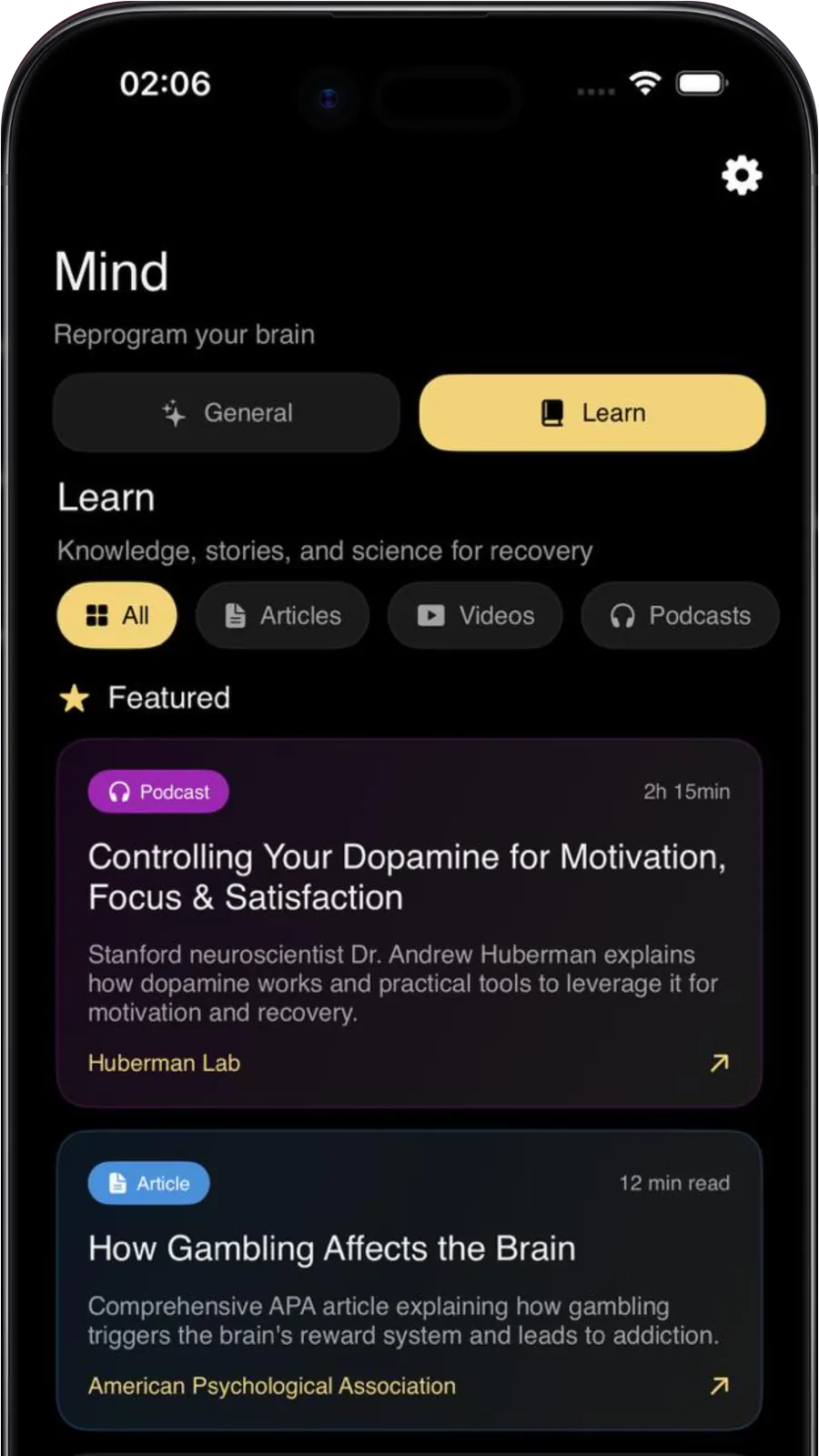
Daily reminders can support the practical work. QuitBet on iPhone offers check-ins, urge tools and progress tracking. Use the app comparison to decide whether an app fits your needs and budget; the worksheet and advice request can start without one.
FAQ
Can I recover from gambling debt without winning the money back?
Recovery from debt can begin with stopping further losses and getting an affordable plan assessed. Another bet puts more money at risk and does not make repayment dependable. Start with the next bill and your current income, even if the total feels too large to face today.
Is there a program that pays off gambling debt?
Do not assume there is a general program that erases or pays gambling losses. Ask reputable local services about options for your actual bills, income and housing needs. The gambling helpline can help locate support, but it does not guarantee financial assistance.
Should I take a loan to repay gambling losses?
Get advice before adding debt, especially if gambling is continuing. Compare the total cost and any security required, rather than the monthly payment alone. A new loan does not remove gambling access or fix an unaffordable budget.
Do I need to know every debt before asking for help?
No. Start with the notice that needs attention and say which information is missing. More records will help a full review, but collecting them should not delay an urgent contact.
Should my partner take control of all my money?
Any support arrangement should be voluntary, safe and clear about access to necessities. Reviewing bills together does not require surrendering every password or account. If threats or financial control are involved, seek confidential guidance before sharing access.
Can a recovery app calculate my debt payments?
A tracker or loss calculator can organize part of the picture, but it cannot assess your legal obligations or negotiate creditor terms. Use your income, bills and notices with a qualified counselor. Daily tools can support quitting alongside that work.
Need to talk to someone right now? In the United States, call or text 1-800-MY-RESET (1-800-697-3738), or chat online, for free, confidential gambling support available 24/7. If you are having thoughts of suicide, call or text 988, or use 988 Lifeline chat. For immediate danger, contact emergency services.
The QuitBet app
Keep your daily plan close
QuitBet for iPhone brings your quit plan, check-ins, gambling blocking and urge tools together.
- A panic button for the moment an urge hits
- Daily check-ins, streaks and money saved
- A blocker for gambling apps and websites
- A community of people quitting too
Download on the App Store
On a computer?Scan with your iPhone camera to get QuitBet.
Rated 4.4 on the App StoreFree to start on iPhone.