A small plan. Something you can hold.

    Free gambling recovery printables

    A calendar to mark your days. A checklist to close access to gambling. Plans for an urge or a game day. Download, print and write down what you want to do next.

    Free PDFs. Color or black and white. No sign-up.

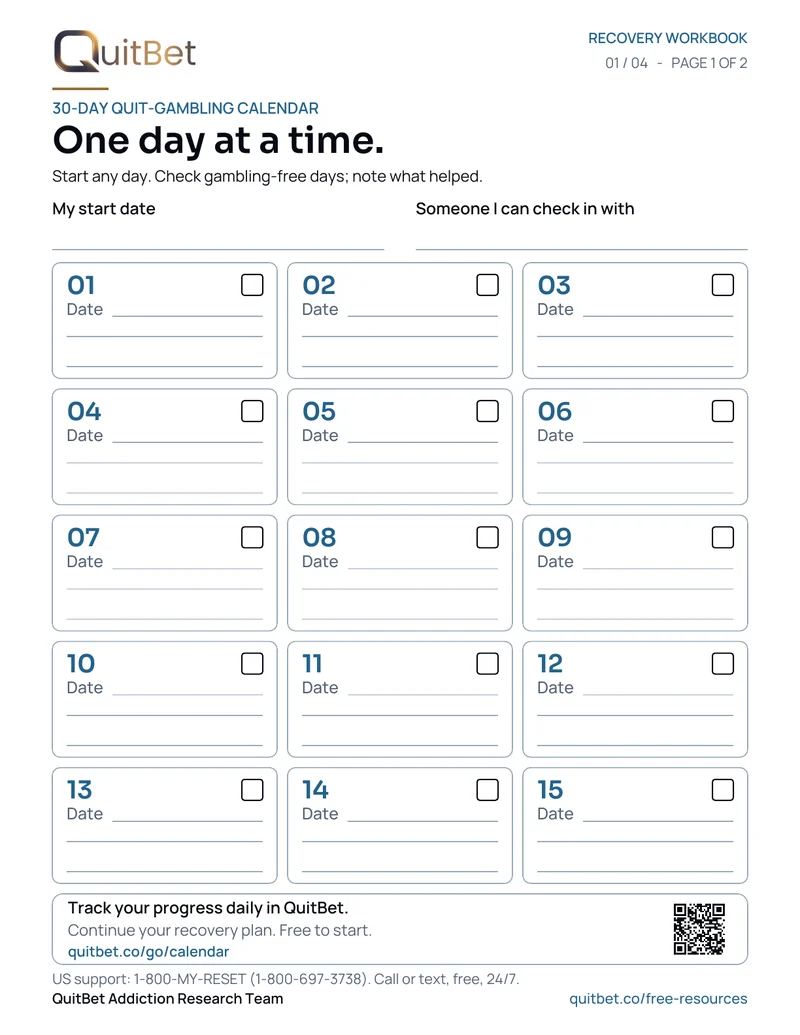
    First page of the printable calendar: days 1–15 with room for handwritten notes

    Start wherever you are.Print your first page →

    Pick what would help today

    US Letter + A4 · Color + black and white

    01Preview of 30-day quit-gambling calendar

    2 pages · Free PDF

    30-day quit-gambling calendar

    A two-page, undated calendar with 15 spacious day boxes per page and room for handwritten notes.

    • Write your start date and the name of someone you can check in with.
    • Print both pages: days 1–15 and days 16–30. Add a date, a checkmark, and your own notes to each day's box.
    • Review what helped and one thing you want to adjust.
    02Preview of Quit-gambling checklist

    1 page · Free PDF

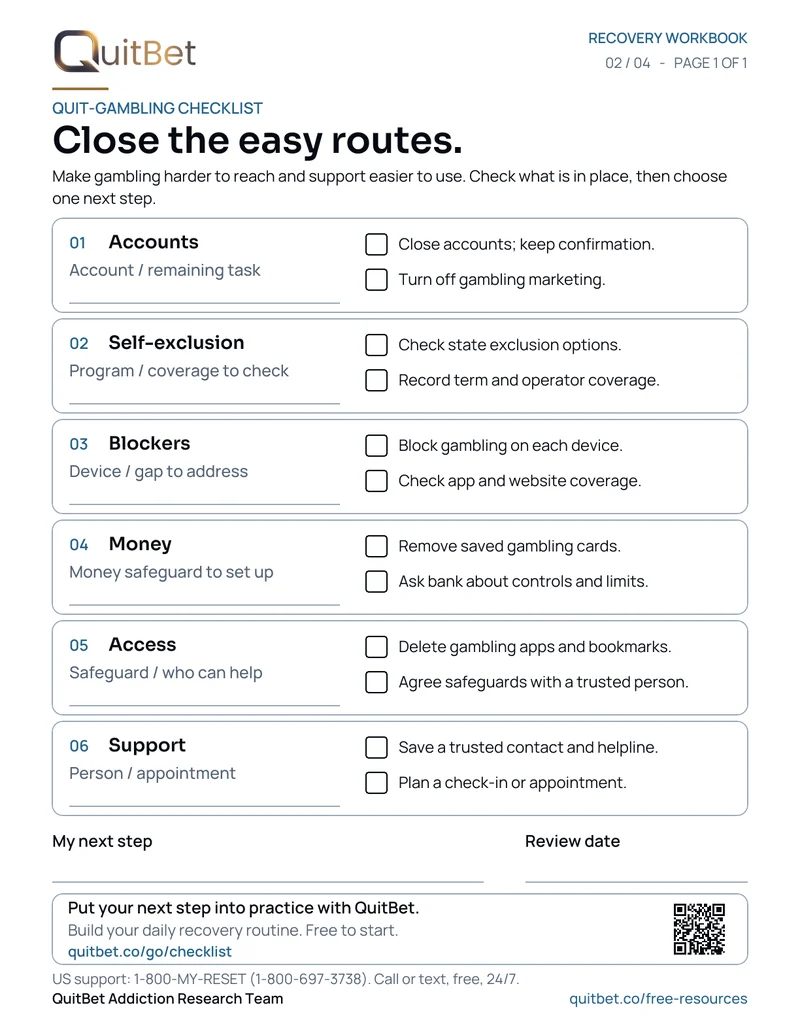
    Quit-gambling checklist

    A practical checklist for accounts, self-exclusion, blockers, money, device access, and support.

    • Work through the six areas and check each step you have completed.
    • Write down remaining tasks, including any gaps in blocking or exclusion coverage.
    • Pick your next step and a date to review your setup.
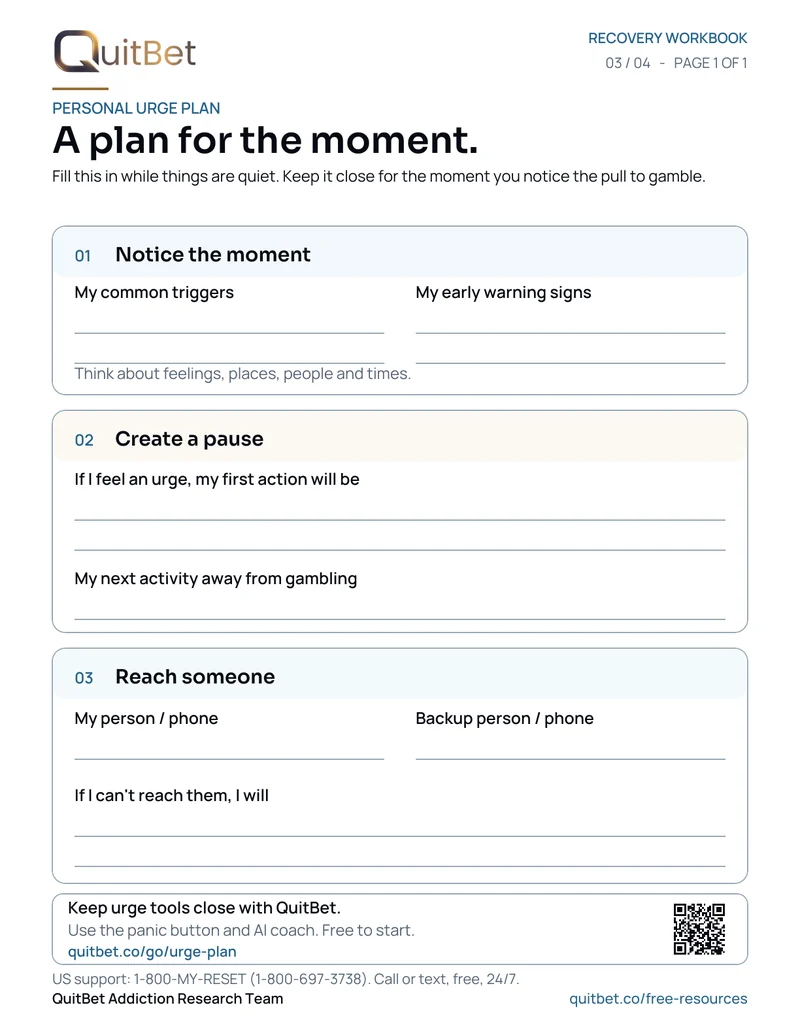
    03Preview of Personal urge plan

    1 page · Free PDF

    Personal urge plan

    A one-page plan for your triggers, first action, next activity, and people to contact.

    • Fill it in during a quiet moment and keep it somewhere easy to reach.
    • Name your triggers, early warning signs, and an action away from gambling.
    • Add a trusted contact, a backup, and a plan if neither is available.
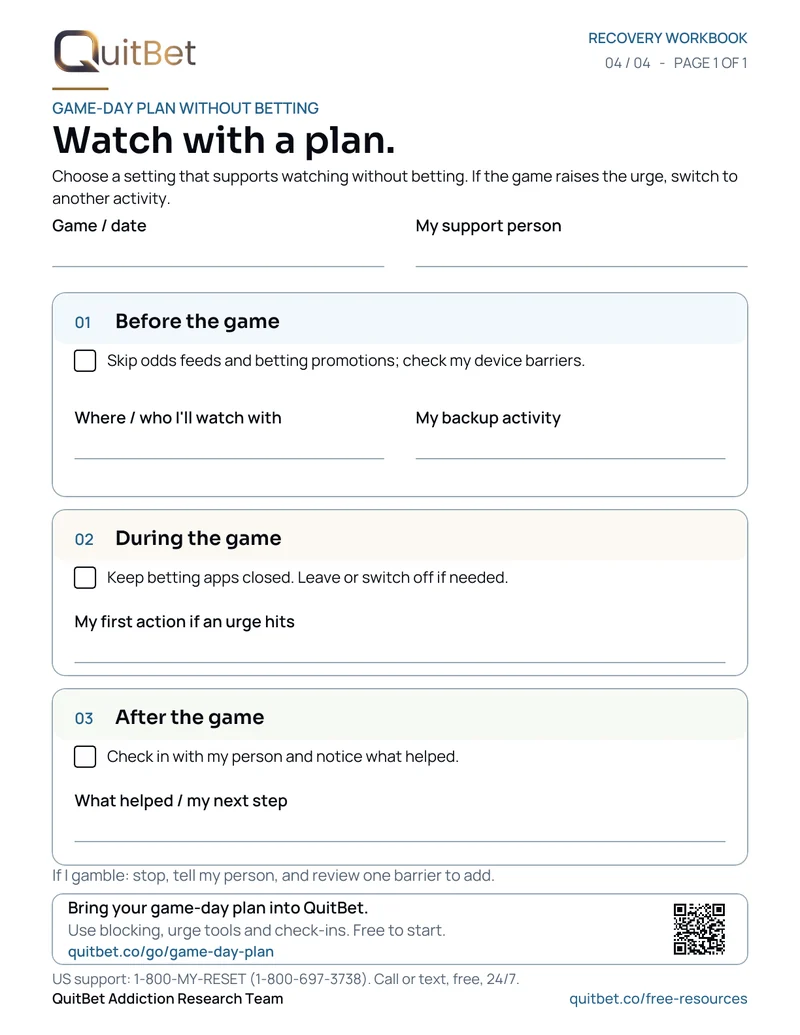
    04Preview of Game-day plan without betting

    1 page · Free PDF

    Game-day plan without betting

    Plan your setting, support, and next action before, during, and after watching a game.

    • Choose where you will watch, who will be with you, and a backup activity.
    • Write your first action if an urge hits and check your device barriers.
    • Check in afterward and note what helped or what needs another barrier.

    Make it yours

    1. 01 / CHOOSE

      Start with one sheet that fits today. You do not have to complete everything at once.

    2. 02 / WRITE

      Use your own dates, triggers and people. Keep the filled-in sheet somewhere private and easy to reach.

    3. 03 / RETURN

      Check what helped. Change your plan when you need to, or print another copy.

    Your handwritten answers stay on your paper. The website does not collect them.

    Questions about the free printables

    Are these gambling recovery worksheets really free?

    Yes. Download every PDF without an email address, account, subscription or app purchase. You can print another copy whenever you need one.

    Which paper size should I choose?

    Choose US Letter for 8.5 × 11 inch paper, or A4 for 210 × 297 mm paper. Print at actual size or 100%, in portrait.

    Should I print the color or black and white version?

    Choose color for light QuitBet accents, or black and white for a monochrome printer and minimal ink coverage. Both versions have the same content and writing space. The black and white PDF is designed separately for clear lines and readable text.

    How do I use the 30-day calendar?

    Print both pages at actual size or 100%: days 1–15 are on the first page and days 16–30 on the second. Write your start date, check a gambling-free day, and use the two writing lines in each box to note what helped. If you gamble, you can keep using the same calendar and make a plan for the next day.

    Do I need the QuitBet app to use these?

    No. These are standalone paper tools. Use them on their own or alongside support from someone you trust, a counselor or a recovery group.

    Where should I get help with gambling?

    In the US, call or text 1-800-MY-RESET for free, confidential help, 24/7. These worksheets help you organize your next steps; they do not diagnose or treat a gambling disorder.